How to use your STILT®
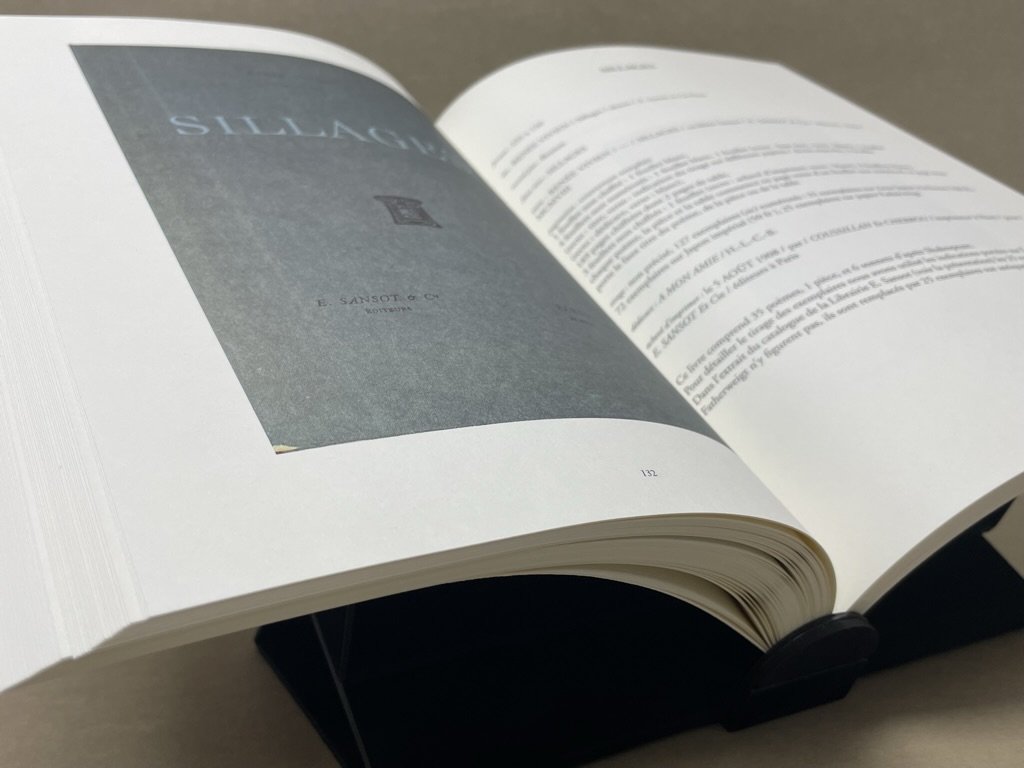
Our STILT® products are made with aesthetics, modularity and practicality in mind while also meeting key preservation requirements.
How to use your STILT
-
We offer a comprehensive selection of sizes and angles to support the format and weight of most bound volumes. If your book seems too large or too heavy for your STILT® product, that probably means it is! Take a moment to read our size and weight recommendations and please don’t hesitate to get in touch with us to discuss the possibility of bespoke sizes and up-sizing.
Our field surface is not suitable for friable, loose or fragile materials such as aged silk or velvet, crumbling leather or embroidered bindings. Likewise, it is not recommended for bookbindings with precious metal detailing. We offer alternative surfaces, accessories and advice for these materials, as well as for longer term exhibition.
Please test the condition of your STILT® product upon receipt and before every use to make sure that it is in good working order.
As with any newly manufactured composite material entering a display environment, we recommend airing your STILT® for 30 days in a well ventilated area before first use with heritage objects. This is standard preventive practice and applies equally to mounts, case linings and packing materials.
Your STILT® contains neodymium magnets. We therefore advise that you keep all STILT® products at a safe distance (>20cm) from heart pacemakers, cochlear implants, mechanical watches, CRT monitors and televisions, credit cards and other magnetically stored media.
-
Follow these simple guidelines and your books will be safe to enjoy long into the future.
Light and duration Exhibiting an open book places strain on both spine and joints, and prolonged light exposure can cause fading, particularly to coloured graphics and materials. We recommend limiting display to a maximum of 3 to 4 months and avoiding direct or prolonged sunlight and strong artificial lighting. To reduce light exposure further, consider turning a page once a day and switching lights off and closing curtains when the room is not in use.
Climate Keep your display area at a stable temperature (15°C to 20°C / 60°F to 70°F) and relative humidity (30% to 50%), with adequate air circulation. A stable climate benefits not only your books but most of your other treasures as well.
Stability When displaying books at a forward-tilting angle, ensure the display is protected from accidental bumping. Open displays using forward-tilting products such as our STILT® Lectern and STILT® Stage should be enclosed by a solid left, back, and front wall. Do not move your book while it is on its STILT®.
STILT® cradles are designed and tested for short term display of up to four months in open or glazed enclosures with normal air exchange. Within that envelope they are proven in use in museum, library and private collections. With a little care, your books will remain a source of pleasure for many years to come.
-
Your STILT® product can be cleaned by wiping gently with a dry micro-fibre cloth or by vacuuming with a soft upholstery brush attachment.
When not in use, store your STILT® product flat and folded in a cool, dry and well-ventilated space. It should be inspected regularly and replaced when it shows signs of wear. Pay particular attention to the powder coated teeth and slots where the aluminium and steel components engage. Replace the product if the coating has worn through to bare metal at this joint, if the foam bearing surface is compressed or torn or if any magnet or metal housing is loose or discoloured. These simple steps should ensure that you can enjoy the use of your STILT® product for up to 10 years.
When you are ready to dispose of your STILT®, all foldable products in our product line are composed primarily of high-quality cellulose fibre which will be welcomed by most paper recycling programmes. Remaining metals can be removed by hand and recycled separately. Ask your fabric recycling programmes if they accept the velour covering material.
Useful Exhibition Tips
-
We recommend that open books be rotated regularly. A good rule of thumb is 3-4 months maximum per display. Consider turning a page of your book every day to limit light exposure.
-
Light fades and weakens bookbinding materials and pigments. The damage is cumulative and irreversible. What matters is the total amount of light an object takes in which means both how bright the light is and how long it stays on. An hour in direct sunlight costs a book as much as several months under proper display lighting.
There are two options for limiting light exposure and they work equally well: turn the light down or show your book for less time. Keep display lighting dim, choose lamps that give off no ultraviolet, keep objects away from windows, and let them rest in the dark between showings.
-
The bearing surface of every STILT cradle is Plastazote LD45, a nitrogen-expanded cross-linked polyethylene foam that is chemically inert, non-acidic and long established in conservation storage and display. STILT cradles are validated for open display and for glazed cases with normal or passive air exchange. They are not currently specified for sealed or deliberately low air exchange cases.
We are currently developing a range intended for sealed or deliberately low-air-exchange cases. For these conditions we recommend seeking the advice of a local conservator.
-
See Before using your STILT® for our 30 day airing guidance.
-
For long term exhibition under glass with restricted air flow, a single material angle controlled support is preferable to a composite cradle. Fully cured powder coated metal is our recommendation over conservation grade acrylic, since acrylic builds a static charge and can attract loose or flaking pigment from illuminated manuscripts and other works with unstable media.
We are developing a STILT® range for sealed and low air exchange cases with Oddy test certification. To be notified when it is available, or to discuss a bespoke solution now, please get in touch.